Abstract · This article provides a detailed technical examination of the Quick Mount Solar End Clamp, a critical component in photovoltaic (PV) mounting systems. The discussion covers its material composition, dimensional specifications, installation methodologies, and mechanical performance, drawing on manufacturer documentation and industry practice to present a comprehensive overview.
01. Material Composition and Corrosion Resistance
The Quick Mount Solar End Clamp is predominantly manufactured from high-grade aluminum alloy AL6005-T5, a material widely adopted in the solar mounting industry. This alloy is specifically selected for its combination of high strength and excellent corrosion resistance, ensuring reliable performance in outdoor environments [citation:2][citation:6].
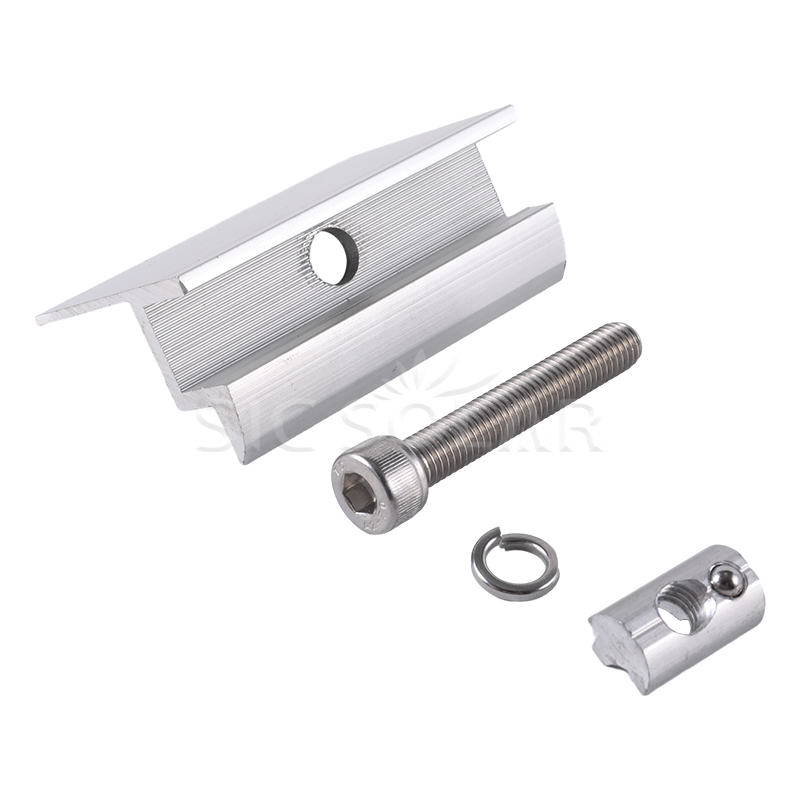
The AL6005-T5 alloy undergoes an anodizing process to create a protective oxide film with a minimum thickness of 10 μm [citation:2][citation:6]. This surface treatment enhances resistance to oxidation and environmental degradation, contributing to a service life of up to 25 years. The fastener components—including the clamp bolt and associated hardware—are manufactured from SUS304 stainless steel, chosen for its corrosion resistance and mechanical strength, with SGS certification verifying material quality [citation:2][citation:12].
Aluminum Alloy AL6005-T5
Anodized (oxide film ≥ 10 μm)
SUS304 Stainless Steel
02. Dimensional Specifications and Compatibility
30–35mm and 30–40mm variants available [citation:2][citation:6]
10–12 N·m (8–9 ft-lbf) [citation:2][citation:6][citation:9]
5 kN or greater [citation:2]
Mill (silver) or black anodized [citation:1]
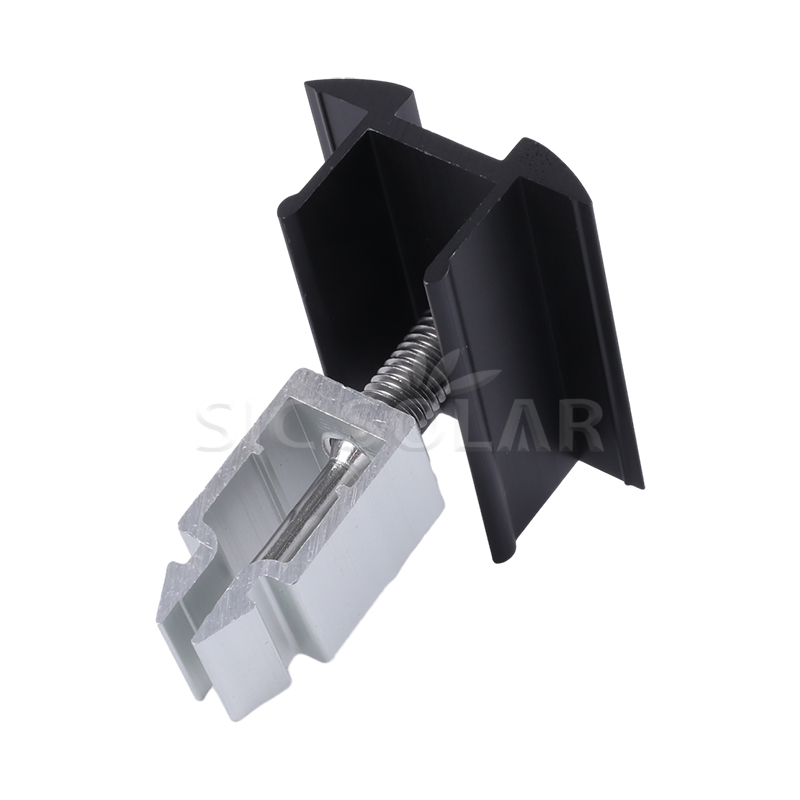
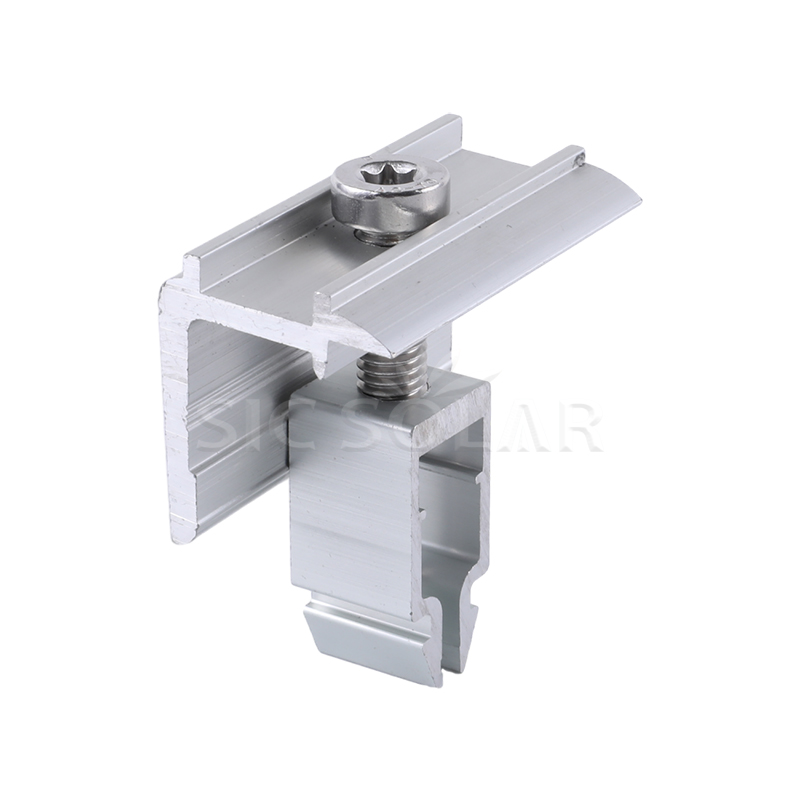
The Quick Mount Solar End Clamp is designed to accommodate a specific range of module frame heights. Standard configurations support panel heights of 30–35mm and 30–40mm, with some universal variants extending to 38–50mm [citation:1][citation:2]. This design ensures compatibility with the majority of commercially available framed PV modules. The clamp is supplied fully pre-assembled with the appropriate bolt and hardware, enabling rapid installation without the need for separate component assembly [citation:2][citation:5].
03. Mechanical Load Capacity and Performance
The Quick Mount Solar End Clamp is engineered to withstand significant mechanical loads. The pullout resistance value of 5 kN ensures that the clamp provides a secure attachment that resists the forces exerted by wind and snow loads [citation:2]. This is achieved through the combination of the high-quality aluminum alloy, robust T-slot engagement, and the use of corrosion-resistant fasteners.
| Parameter | Specification |
|---|---|
| Pullout Resistance | 5 kN or greater [citation:2] |
| Recommended Bolt Torque | 10–12 N·m (8 ft-lbf) [citation:2][citation:9] |
| Service Life | Up to 25 years [citation:2][citation:6] |
| Warranty | 10 years [citation:2][citation:6] |
The mechanical design incorporates a locking mechanism that engages with the rail slot, providing positive retention. Proper torque application is essential—too little torque may result in insufficient clamping force, while excessive torque can damage the module frame. The recommended torque range of 10–12 N·m is standard across the industry [citation:9].
04. Installation Method and QClick Technology
The installation methodology of the Quick Mount Solar End Clamp is designed for simplicity and speed. Many variants incorporate the QClick technology—a press-in engagement mechanism that allows the clamp to be inserted into the rail channel with a single push, without the need for additional tools or complex alignment [citation:1][citation:9].
- Positioning: The clamp is aligned at the edge of the module and pressed into the rail channel.
- Engagement: The clamp body sits flush against the module frame and the lower section sits squarely on the rail [citation:9].
- Tightening: The clamp bolt is tightened to the specified torque (10–12 N·m) using a standard wrench or torque tool [citation:2][citation:9].
- Verification: A final check confirms the module is flush and the clamp is secure.
Installation Note: The rail must extend beyond the module frame by a minimum of 30 mm (1.2 in) to provide adequate space for the end clamp installation [citation:9]. For hidden end clamp variants, the clamp is pre-installed on the rail before the module is positioned.
05. Electrical Bonding Functionality
Specific variants of the Quick Mount Solar End Clamp incorporate electrical bonding capabilities to meet system grounding requirements. Bonding-enabled end clamps include a stainless steel pin or bonding block designed to penetrate the anodized coating of the module frame and the rail, establishing an electrically conductive path [citation:1][citation:4].
- Bonding Pin: An integrated stainless steel pin that contacts the module frame and rail to create an electrical bond [citation:4].
- Bonding Function: Ensures the grounding continuity of the array as required by electrical codes and UL 2703 certification [citation:1][citation:3].
- Application: Bonding end clamps are used where the mounting system must provide a consistent electrical path to ground.
For systems that do not require bonding, non-bonding variants are available. The selection between bonding and non-bonding clamps depends on the overall system grounding strategy and the specific installation requirements [citation:1].
06. Quality Standards and Certifications
The Quick Mount Solar End Clamp is manufactured to comply with rigorous industry standards, ensuring safety, performance, and reliability. These certifications are an important consideration for engineers specifying PV mounting components.
- ISO 9001: Quality management system certification, confirming consistent manufacturing processes [citation:3].
- UL 2703: Standard for mounting systems, grounding, and bonding equipment for solar panels [citation:3].
- CE Certification: Compliance with European safety, health, and environmental requirements [citation:3].
- IEC 61730: Safety qualification for photovoltaic modules [citation:3].
Certification Note: The use of certified components is often a requirement for project approvals and insurance. When selecting a clamp, it is advisable to verify that the manufacturer provides documentation for the relevant standards.
Frequently Asked Questions
Product specifications and certifications may vary. Always consult the manufacturer's documentation for your specific application.